
प्राणमय कोश · Prāṇamaya Kosha

Conscious Breathwork

Learn the breath you've taken for granted.

Every thought, every emotion and every hour of your day rides on the breath. The yogis mapped it with astonishing precision: which nostril flows and when, how it moves with the moon, and where it travels through the body. Six teachings bring that map into daily life.

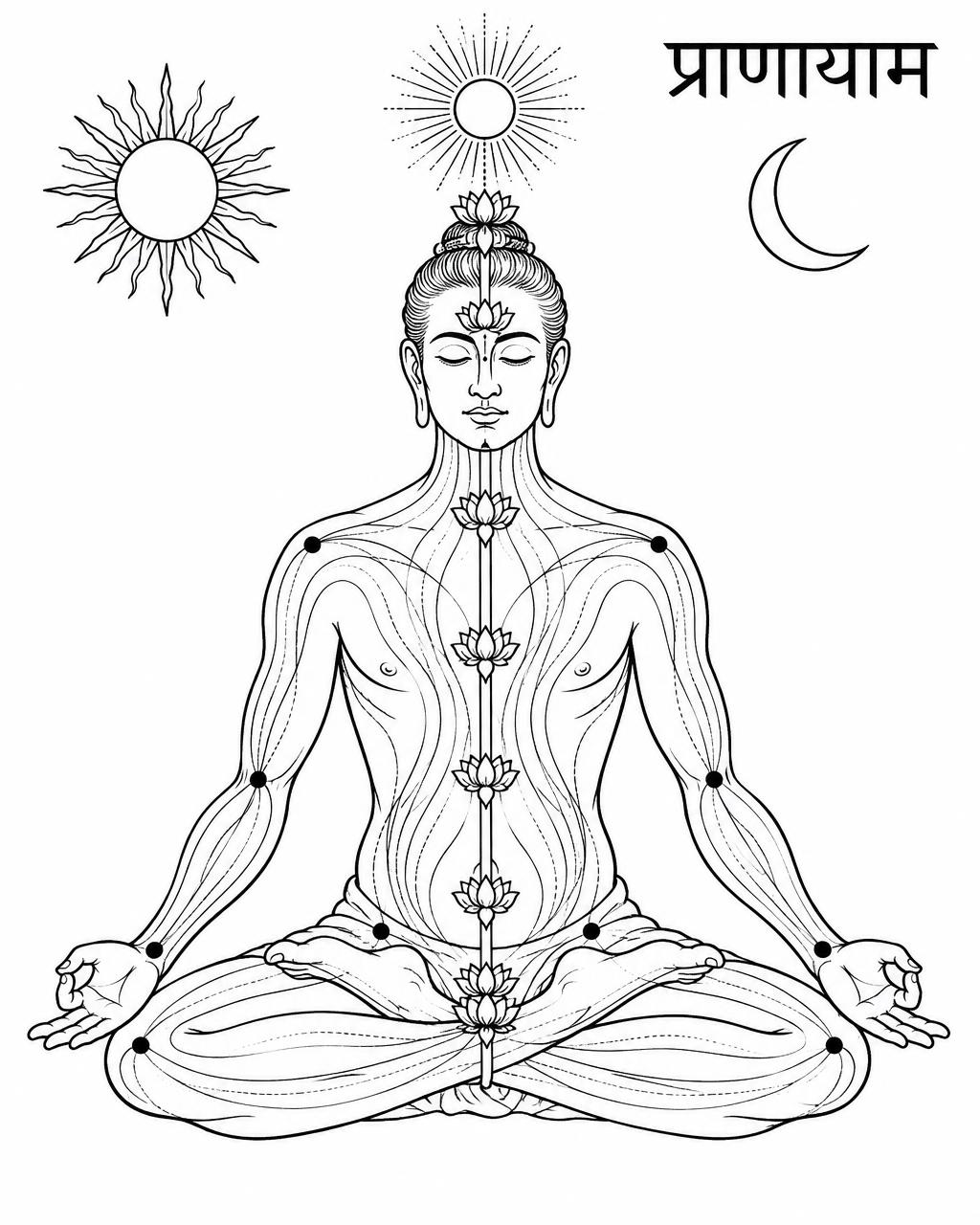
Traditional Indian chart titled Prāṇāyāma showing a seated yogi with the nāḍīs, the chakras along the spine, the sun on the body's right and the moon on its left.
Traditional chart of the nāḍīs, the channels of prāṇa.Credit: [to be added]

Rooted in the Shiva Svarodaya·Taught by Dr. Sarvajna Krishna, Educator·English · ಕನ್ನಡ · हिंदी·Bangalore · Dubai · Online

The forgotten fundamental

You breathe around 20,000 times a day. How many do you notice?

We're taught to hold our breath underwater, never how to use it on land. Yet breath is the one function that runs by itself and still answers to you. It is a doorway to the nervous system, to the mind, and to the life force the yogis called prāṇa.

चले वाते चलं चित्तं निश्चले निश्चलं भवेत्

When the breath moves, the mind moves; when the breath is still, the mind is still.

Haṭha Yoga Pradīpikā 2.2

It runs on a rhythm.

Your breath favors one nostril, then the other, through the day. The swara texts mapped this centuries before science named it the nasal cycle.

It moves with the moon.

The yogic calendar sets practice by the lunar day, not the clock.

It flows through a map.

Nāḍīs, chakras and marma points have been charted for centuries, like the plate above.

Try it now

Which nostril is flowing?

  1. 1.Close your right nostril and breathe softly through the left, three times.
  2. 2.Switch sides.
  3. 3.Which side felt freer?

The signature map

Six teachings, one map.

This chart holds centuries of observation. Scroll through the six teachings and watch each one light up on the map.

Traditional Indian chart titled Prāṇāyāma showing a seated yogi with the nāḍīs, the chakras along the spine, the sun on the body's right and the moon on its left.

Teaching 1 of 6

Swara Vidyā

स्वर विद्या (Swara Vidyā): the science of the flowing breath

Your breath favors one nostril, then the other, all day long. Learn to read it, and to time your day by it.

What you'll learn

  • Iḍā, Piṅgalā and Suṣumnā: the moon, sun and central flows
  • how to check your flow anytime, anywhere
  • which activities suit each flow
  • how to change the flow when you need to
  • the five tattvas within the breath
  • the Shiva Svarodaya, made practical

Try this today

Before your next task, check which nostril flows. Right suits action and effort; left suits calm and creative work; both together suits meditation.

Practice gently. Stop if you feel dizzy or uncomfortable.

Format · Free 45-minute introduction, then three levels: Level 1 Iḍā (foundation), Level 2 Piṅgalā (application), Level 3 Suṣumnā (mastery and certification).

Teaching 2 of 6

Lunar Alignment

चन्द्र कला (Candra Kalā): living by the moon

The yogic calendar runs on the moon, not the clock. Learn its rhythm and plan practice, rest and effort with it.

What you'll learn

  • the 30 tithis and the two pakṣas
  • what the tradition observes about the moon, the breath and the mind
  • Pūrṇimā, Amāvāsyā and Ekādaśī, and how to keep each one
  • reading a pañcāṅga in five minutes
  • beginning new practices on the waxing moon
  • a lunar journal of your own patterns

Try this today

Tonight, look at the moon. Note its shape and your mood in one line. Keep this up for one lunar month and your own pattern will appear.

Practice gently. Stop if you feel dizzy or uncomfortable.

Format · Short course, also part of Kāla Vidyā, The Science of Time.

Teaching 3 of 6

48-Day Foundation of Prāṇāyāma

प्राणायाम (Prāṇāyāma): the daily discipline of breath

Forty-eight days is a maṇḍala, long enough for a practice to become part of you. A little every day, built step by step.

  1. Days 1–12 · Awareness

    The natural breath, nasal breathing, posture, diaphragmatic and full yogic breath.

  2. Days 13–24 · Balance

    Nāḍī śodhana, reading your swara, morning and evening routines.

  3. Days 25–36 · Steadiness

    Ujjāyī, bhrāmarī, the longer exhale, and a gentle guided pause.

  4. Days 37–48 · Integration

    Your personal sequence; breath for work, sleep and stress; stillness after breath.

Try this today

Breathe in for four counts and out for six, for two minutes. A longer exhale tells the body it can settle.

Practice gently. Stop if you feel dizzy or uncomfortable.

Format · 48 days, with guided daily audio, a PDF practice journal, a weekly live session and WhatsApp support.

Teaching 4 of 6

Chakra Awareness & Balancing

चक्र (Cakra): the seven centers of the spine

Seven centers along the spine, each with its own element, sound and state of mind. Learn to feel them, not just name them.

What you'll learn

  • the seven chakras, from Mūlādhāra to Sahasrāra
  • the location, element and bīja sound of each
  • noticing which center feels heavy or restless
  • breath and sound practices to bring them into balance
  • how the tradition maps the chakras onto the body's glands
  • a ten-minute daily chakra breath

Try this today

Sit tall. Breathe into the base of the spine and hum 'LAM' softly five times. Notice where the sound settles.

Practice gently. Stop if you feel dizzy or uncomfortable.

Format · Workshop or short course.

Teaching 5 of 6

Marma Basics for Daily Life

मर्म (Marma): the body's vital points

Ayurveda names 107 marma points, where muscle, vessel, tendon, bone and joint meet and prāṇa gathers. A few of them, touched gently, can settle the mind and refresh the body.

What you'll learn

  • what marma points are, and why they matter
  • the safe points for daily self-care
  • a five-minute morning routine
  • routines for winding down, for focus, and for after meals
  • gentle pressure, breath and oil
  • which points to leave alone

Try this today

Press the center of each palm (Talahṛdaya) gently with the opposite thumb, for six slow breaths.

Practice gently. Stop if you feel dizzy or uncomfortable.

Format · Workshop.

Teaching 6 of 6

The Ten Prāṇas

दश प्राण (Daśa Prāṇa): explained, and how to balance them

The yoga texts describe prāṇa moving in ten ways: five main currents and five minor ones. Learn what each one does, and simple ways to keep it in balance.

What you'll learn

  • the five vāyus: Prāṇa, Apāna, Samāna, Udāna, Vyāna
  • the five upa-prāṇas: Nāga, Kūrma, Kṛkara, Devadatta, Dhanañjaya
  • where each one moves, and what it governs
  • signs that a current is out of balance
  • breath, mudrā and food to balance each one
  • a daily ten-prāṇa check-in
Udānathroatspeech and expression
Prāṇaheartbreathing and intake
Samānanaveldigestion and assimilation
Apānapelvic baseelimination
Vyānawhole bodycirculation and movement

Try this today

Inhale and feel the breath rise into the chest (Prāṇa). Exhale and feel it settle toward the pelvis (Apāna). Five slow rounds.

Practice gently. Stop if you feel dizzy or uncomfortable.

Format · Short course.

Where to start

Find your doorway.

New to breathwork?

Free 45-minute introduction, then the 48-Day Foundation.

Enquire for fees

Drawn to the yogic science?

Swara Vidyā, Levels 1–3.

Enquire for fees

Want one topic?

The Lunar Alignment, Chakra, Marma or Ten Prāṇas workshops.

Enquire for fees

Prefer one-to-one?

Conscious Consultation, 60 minutes, online.

Enquire for fees

Questions

Before you begin.

Begin with one breath.

Join the free 45-minute introduction. You'll find your active nostril, switch it on purpose, and feel the difference for yourself.

Join the free introduction
Traditional Indian chart titled Prāṇāyāma showing a seated yogi with the nāḍīs, the chakras along the spine, the sun on the body's right and the moon on its left.